Showing posts with label Space. Show all posts

Monday, 23 November 2015

My time with Guild Wars 2: Heart of Thorns release

Traditionally, one enters the expansion of an MMO with a number of thoughts.  There is a sense of anticipation regarding the new content available to experience; a drive to explore the new environments and discover rare treasures and Easter eggs; a determination to take on the new challenges before you and continue to forge a story of your character amongst other things that make an MMO special.  That being said, my time with expansions in the past has kind of been marred by the feeling of a need to ‘rush’ through the content so you can remain on par with the overall progression.  Whether it be rushing to max level so you can start gearing up for the end-game raid, or practising with your new skills to stay competitive in the new pvp season, for many players a lot of the content will fly past them swept up in xp numbers and the occasional ‘ding’.  Over the past few years, this concept has become less and less appealing to me, so to have Guild Wars 2s new expansion Heart of Thorns not following this convention with no level or gear cap increase has renewed my interest in playing through such content.  Now I've had a couple weeks with Heart of Thorns, I would say that it has been a thoroughly enjoyable one that I'm looking forward to its continued progress.  


The new character select screen has a nice UI fade-out showing off your character and the jungle motif.  Screenshot taken 22/11/2015


Heart of Thorns takes off from where Season 2 of the Living Story left us with The Pact in tatters after the attack by Mordremoth which tore the airships from the sky and sent Sylvari into an internal conflict as the jungle dragon twisted their thoughts.  The Pact Commander (the player character) is charged with picking up the pieces of The Pact while leading a small band of adventurers (more commonly known as Destiny’s Edge 2.0) to bring an end to Mordremoth; something which requires a great deal of exploration and information gathering.  
The story in this expansion has evolved from the game's initial release in 2012, removing the side-by-side dialogue cut-scenes and replacing them with in-game NPC conversations which feature in a mix of both open world and story mission instances; making the conversations feel a lot better in terms of context as well as getting the player character to voice / emote their thoughts to groups of people.  It is clear that these story missions have also learnt from the previous Living Story seasons with the addition of movement / vehicle mechanics (see the Zephyrites for such an example) but where it has added its own new feature is through the integration of the mastery system added in Heart of Thorns.  


The vines of Mordremoth cracking the stone it falls upon, show-casing the power of the expansion's main antagonist.  Image from Guild Wars 2, Heart of Thorns release trailer via YouTube.  Accessed 23/11/2015


As I mentioned earlier, Heart of Thorns doesn’t have any level cap increase which may spark the question “what character progression is there to be had?”  Masteries is what answers this through an alternative levelling system that looks to level environmental skills to aid one’s journey through the Maguuma Jungle.  For example, one can learn how to use a glider to assist in getting around the map in short bursts.  As you put more mastery points into this skill (a currency obtained by completing HoT objectives / achievements) you learn how to use up-drafts to gain height, stealth techniques to stop enemies knocking you out of the sky, and leans to become more efficient.  On the surface, this doesn't really do much, but in depth it gives the player a great experience of the map much like a metroid-vania; where you find a canyon you can’t cross at first but with that one skill improvement you find a way to reach the other side.  For me this was experienced early on in my playtime when I didn’t have access to the jumping mushroom skill (Itzal mastery).  There was an event involving the recovery of wyvern eggs from a plateau that took some 30-60 seconds to climb normally, but with this mastery I was able to reach the top in 10 seconds, allowing me to have a much greater contribution for the event.  I feel it's a rather clever way to extend the playtime of maps, because you can’t just rush through it 100%’ing everything without taking time to learn the new skills.  As I mentioned previously, I was one to rush through to end-game in previous MMos but my time in HoT hasn't felt rushed and in turn i’m taking note of more of the landscape, its characters and events.  


Flying high in the canopy showcases how much space is in the map.  Draw-distance aside, it's pretty big.  Screenshot taken 22/11/2015


Another thing I'm loving about these maps is the verticality they hold reinforcing the importance of these new masteries and depth of the playable space.  Before the expansion launched, there was a lot of talk about how each map would have 3 levels of interaction (Roots, Jungle and Canopy) and although each level doesn’t constitute a full map, it does add some interesting dynamics to the game-play.  The first map of the expansion (Verdant Brink) has you fighting in the jungle during the day, but when night falls you find yourself up in the canopy battling with one of the zone’s boss battles using your newly honed gliding skills to stop you meeting an untimely end below.  Although I have thoroughly enjoyed playing through this content there is something that has marred my experience being performance issues when interacting with large groups of players.  Having 15fps when trying to dodge a large fire breath attack from a rampaging Wyvern Matriarch creates its own unique challenge, but it is definitely one that I would like to not contend with.  This of course wouldn’t be an issue once I get my new PC built, but for now if you’re someone who has a low-performance PC you will probably find yourself sticking to the small form content such as the story and adventures.  


This boss event requires the players to glide off and throw eggs at it to make the ground safe and continue the fight.  Screenshot taken 22/11/2015


This is not to say that you’ll have a worse experience because one of the things i’m loving about HoT is its range of content available.  Adventures have been a great deal of fun for their ability to add small parts of competitive events without the taxing performance above.  These challenges are dotted around the map (usually correlating to a nearby outpost which may have conventional events tied to it) and task the player with racing/fighting/flying/etc their way to achieve a gold, silver or bronze reward.  These adventures also have leader-boards on them, which allow for players to hone their skills and look to get on the top of the leader-board for all to survey, which personally has been a task that I usually come mid/high in the rankings.  The adventures also have a nice connection with the mastery system, as many challenges are easier to achieve higher scores through the use of said skills e.g. Tendril Torchers has a mesa which one can access via a jumping mushroom, allowing you to clear a large number of tendrils that otherwise wouldn’t be accessible.  


Alongside Adventures, finding hidden mastery points adds to the enjoyment of exploration.  Screenshot taken 22/11/2015


As you can probably tell by this post, I am very much enjoying my time in HoT, but if you’re from a traditional MMo point of view, you maybe thinking that not having a level/gear cap increase somewhat diminishes the experience of an expansion.  This of course can be an issue but I feel that HoT has created an enjoyable combat loop with enough customisability to keep it fresh.  Since entering the HoT maps, I have tried a number of builds on my trusty engineer ranging from heavy damage condition builds to the more supportive boon / healing builds which have been relevant to keep some of the my more ‘glassy’ companions alive.  New stat combinations in gear have helped in making these builds more viable, but the addition of the specialisations have added a new interesting dynamic to my favourite profession in the name of the ‘scraper’.  This build gives the engineer a proper melee weapon (tool kit has been around but i’m classing it as a skill in this context) in the Hammer alongside an array of mobile drones to assist you in combat.  Like with many players, I went for my specialisation straight away to give it a try and found myself getting a lot of fun out of the build with its mixture of CC and combo fields, but in the long run I think I would need to properly invest in a gear setup to get the most out of it.  
Engaging with other specialisations has been a mixed bag of feelings between co-operation (pve) and competition (pvp).  I love how different weapon types like shields, torches, warhorns have these interesting skills such as the Chronomancer with their shield; but the learning process to properly know how to act on these skills has been a bit annoying especially due to my low performance set-up.  To give you an example, the Chronomancer elite skill ‘Gravity Well’ is a large aoe that causes float, pull and knock-down but due to my graphic settings and culling I get a very faint outline of this skill, if anything.  I also have a similar experience with the Dragonhunter skill “Hunter’s Ward’ because the barrier won’t show up on my screen, so naturally I knock into the barrier and potentially not get off that life saving elixir throw (speaking from personal experience in spvp).  Naturally, this will improve when my hardware improves, but i’m in that awkward space of not sure whether the range of skill effects correlate with a reasonable means of educating yourself to act upon it.  


A check-list with little hints to the next objective makes achievement hunting fun in-game rather than a chore.  Screenshot taken 23/11/2015


The last thing I wanted to talk about was something that on the surface is really minor, but I absolutely love as an explorer / achiever.  In the past, if you had an achievement with multiple tasks to hand (e.g. coin collection in Dry Top or the Dive Master) you had little means to know which ones you were missing outside of external guides.  In HoT, they have now put in a proper list system for these achievements so it's much easier to have a in-game / world means to discover and explore.  When I first came back to Guild Wars 2, I wrote about this explorer nature and how it really gets me involved in the world, so having this information available to me keeps me from alt-tabbing to Dulfy and just following a guide (not that it's a bad thing I just personally prefer the current setup).  
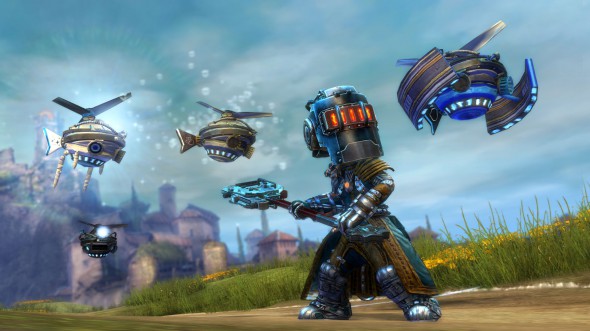

The Scrapper with his drones give Engineers a new way to play.  Image from https://www.guildwars2.com accessed 23/11/2015


Overall, I have thoroughly enjoyed my time in HoT as an experience continuing my enjoyment of the world of Guild Wars 2 and the MMo as a genre.  Having a expansion that doesn’t right off your achievements of the past couple years as well as giving you new challenges to go up against seems so logical that looking back at the WoW/Rift expansions makes them look ‘old-fashioned’.  A level cap increase feels arbitrary and now i’m enjoying the maps because I like being there, not because I need the xp to get to the next place.  This expansion respects your time whether you want to spend 30 minutes a day doing a couple events or power game your way through a 10 hour binge in meta events and raiding; which is something I hope stays relevant in the months to come.  Whether you’ve played many MMos or completely new to the genre, I think this game and its recent expansion Heart of Thorns is a great game to get involved in and experience what it has to offer.  

Wednesday, 11 November 2015

Blog: Updates and the General On-goings at the Moment

I recently looked back at this blog to see topics I had discussed in the passed when I realised its been quite a while since I last put finger to keyboard. As is usually the case, life has a way of giving you lots of things to do so here's a quick update on the past 2 months.

IRL
Work commitments have been keeping me busy for the majority of my time as I'm getting involved in a number of side projects which have been occupying the time I would of set aside for writing this blog. These projects included guided talks, exhibition design and lectures for professional qualifications which naturally allow me to make more progress towards my goal of a curatorial / archival role within the museum and heritage sector. That being said, I can't blame it all on that otherwise I could just organise my time more effectively, but the times where I have thought to do blog writing I find myself attending a social event or being incredibly late getting home due to delays on the London transport links. To give context to such a point, last Sunday it took me 3 hours to get home whereas a normal journey would take somewhere in the region of 80-90 minutes. It doesn't stop you from writing, its just takes you out of the mindset.

A somewhat related point to this is the 'fun' of moving as I'm looking to move much closer to work to cut down on my commuting time. Organising viewings between work and getting as much information as possible takes up a surprisingly large amount of time which I haven't had to deal with in the past. This has been compounded by the fact that recently I applied for a job much further afield back in my university home of Plymouth so between moving 20 miles and 250 miles has brought another set of tasks to accomplish at the moment.

As well as this, I recently turned 26 which brought a nice mixture of nights out and time off to do nothing (more on that later). I went out on Halloween dressed up (something I very, very rarely do) and ended up getting home at like 6am which I haven't done a night of that length in quite a while but was welcome the next day by remnants of face paint and quite the hangover to contend with. Again, I could have been writing during this time but I wanted a couple days to myself which has become the topic of a post I want to write about that I have hinted at from time to time; a factor of a player dwelling in a game and how it fits in an individual / solo environment. It basically talks about “the lodge” of architectural theory being a dwelling of personal space and how much private time one can have in a space where you're accessible through multiple means at a moments glance. This may come across as introverted, but we shall see when we get there.


Gaming
The majority of my time gaming has been taken up by the recent release of Guild Wars 2's expansion, Heart of Thorns which has been an interesting time for me. It has been very different to expansions I've played in the past (WoW, Rift, ESO, etc.) due to not having a gear / level cap increase and I haven't felt like I'm in a rush to 'get to the end game content' that I would race towards, which in turn has allowed me to enjoy it a great deal under my own terms. I am going to do a proper discussion on it soon, but it has been a highly enjoyable time over the past week and a half and I look forward to what's coming next from Arena Net.

As my time for Guild Wars 2 has increased, my time in Warframe has decreased by quite a bit. I'm in an awkward space with that game because I enjoy the gameplay loop but the RNG nature of its loot system is causing my enjoyment to wane. The fact that I'm getting a load of new things in GW2 may have something to do with it but I think I may need to have some time away to truly get back into it. Its a bit like last year with GW2 where I took a couple months break and found myself enjoying it all over again. For now, my Tenno is docked with its dailies grabbed each day but not much more than that.

With the recent release of Fallout 4, I have also perked my interest for the franchise by replaying Fallout New Vegas alongside its DLC on a new luck-based character. As someone who usually 'powergames' Fallout with a high-intelligence character on energy weapons, It's been an fun experience going through with a sneak / guns build with high critical hit chance. I've also gone for a karma neutral character role-playing as someone out for personal gain which has opened me up to some new interesting quest-lines that I haven't experienced before this play-through; showcasing the recognised re-playability of these titles years after their initial release. By the time I fully finish New Vegas, I would like to start on Fallout 4, but that depends on my last point of a new PC build.
I have mentioned before how I'm looking to build a new PC as my current one is ~8 years old and definitely showing its age. As my post on low-performance gaming shows, it hasn't been all bad but I've got to the point where I would really like to play modern games on a smooth frame-rate as well as nice graphical fidelity. My PC build is coming in around £900 but I'm currently in an awkward space of “do I build now or wait until the sales?” That being said, it does ask the question “which sale?” because we have black Friday, Christmas and January sales over the horizon and I may just end up saying “f**k it!” and buying it anyway. Time will tell but as long as it stays under £1000 I think I'll be happy.


Well, that's everything regarding the last couple months in my life. Writing this up has been important for me because its a step back into the blog space which is important because I need it to be regular for someone to be interested in. A lot of this maybe words thrown into the twisting nether of the internet and its vast accessible information, but if you find these posts interesting that's what gets me to continue on. Anyway, next topic will either be the 'Player Housing from the individual' or 'Thoughts on GW2:HoT” so look out for that on Monday.


Now back to the 101 other things on the list :\

Tuesday, 15 September 2015

Thoughts on Guild Wars 2 Raiding

A couple weeks ago, the guys at Arenanet did a live-stream talking about the inclusion of “challenging content” coming alongside the release of the game's first expansion, Heart of Thorns. The stream went on to discuss the nature of its raiding content; outlining its large set pieces and difficult encounters that will require the co-ordination of your group (of which has been set to 10 players) to overcome significant opponents. Over the past couple weeks, I've 'ermed and errred' over this subject trying to think about how I would like to discuss it, but I feel I've got to a point where I feel it best showcases my thoughts. These thoughts come from two particular areas: my interest of architectural theory and my experience of raiding in traditional MMOs such as WoW and Rift.

Many years ago raiding up against Onyxia in WoW.  Screenshot taken 19/08/2006


The subject of raiding in essence is quite simple; stringing together challenging bosses broken up by trash mobs and narrative to give context and pacing to the environment. Its the way a significant force can be tackle in a narrative, that may present them as an almost impossible mountain to climb but through determination and skill it can be overcome. This of course is a strong feeling to have in a game like an MMO (and kinda any game really) but grouping together with like-minded people and having that roar from a VoIP server upon success is amazing to experience. I experienced this in WoW during Vanilla and Wrath as well as Vanilla Rift as both a healer and DPS which to a certain extent was a while ago, but with Guild Wars 2 I have the potential to experience that once again. That being said, I'm not sure whether the game (or myself) can live up to what raiding is.

My first time seeing Rag was a memorable experienced hampered by the nature of Molten Core.  Screenshot taken 17/12/2006


The most clear point on this subject in my opinion is the nature of the current content; that focuses heavily on grouped-up 'blob-like' movement with enemy movement that plays into this. There are of course reasons behind this such as boon stacking (stacking large numbers of buffs on the party in quick succession), ease of access to resurrecting downed players and that players are rarely punished for acting in this way. To a certain extent, it makes me think of the traditional “boss vs. tank” then everyone else that I experienced in my days of raiding in places like Molten Core as the factor of the number of players doesn't matter visually. Of course the damage matters but the enemy doesn't care as it just sees 'enemy'.

World bosses maybe large but the same tactic applies.  Screenshot taken 14/09/2015


The second point, more relevant to my interests, means that the environment and its narrative is somewhat fractured by this. Whether you're in AC, CoE, Fractals or an open world meta event boss you adopt the blob and keep on attacking and the background becomes blurred to a certain extent. You maybe doing world bosses for 3 or so hours but all that's changing is the backdrop; a theatre if you will that revolves the background from a townscape to a forest during a performance but the actors are still conversing in the same prose. A couple weeks ago when I did a post about arenas I did say that the combat loop can be engaging if the arena gives you an engaging environment and narrative to get stuck into, but at the moment Guild Wars 2 content in the above examples doesn't give me the same feeling.

A large boss that hopefully looks to be more dynamic in its movement and actions.  Image from https://www.guildwars2.com/en/news/designing-challenging-content/ accessed 14/09/2015


Going back to my earlier paragraph on raiding, one of the pieces I did discuss that its not just the bosses but the connecting sections that add to the experience of a raid. Personally, I feel that this is what Guild Wars 2 currently has a lot of potential to set themselves apart. They have a enjoyable series of jumping puzzles, open world explorable dungeons and guild puzzles that create an interesting mix of combat and cryptic problem solving allowing groups to use logic and deduction to balance the combat they experience in the vast amount of a game like Guild Wars 2. Going back to my time raiding, the process was very much so a “trash->boss->trash->boss” loop and although if the bosses are engaging this can work, having these interest mid sections that replace trash at points (trash->boss->puzzle->boss) it can keep people interested for longer with a level of pacing appropriate.

Using mechanics like gliding has the potential to give us those interesting connecting paths.  Image from https://www.guildwars2.com/en/news/designing-challenging-content/ accessed 14/09/2015


These thoughts naturally follow into quite a few posts I've made on this blog in the past. Pacing is a subject from “Walking Simulators” because of the tone rarely changes and the pace remains static alongside the “Arenas” that need to not just be arenas but means to create grand set pieces and times of lull so that the player doesn't tire of the content. In architecture we do this with room sizes, lighting levels, furniture arrangement, level changes, open plan vs. closed and an overall consideration for the human interactions that may go on such a space which together play a lot into our thoughts of how we remember it. Did that museum take you through a story of a by-gone time or did it feel somewhat out of place with a bright background on the content of a tragic event. As space does this in the built environment, so must a digital one.


To conclude, challenging content is a great more than just difficult encounters. The importance of the spaces engaging the player so that context and motivation is given for players wanting to overcome the challenge. Difficult bosses is one thing, but difficult bosses with pathways, narrative, times of intense feelings and lulls in the pace all make an experience like a raid so much more. Will GW2 do this? Time will tell but I hope that becomes a memorable experience for those who look to take on its content. Only like 5-6 weeks to find out and personally I'm looking forward to it.   

Thursday, 27 August 2015

Pathing, Walking Simulators and Architectural Theory

With the advent of games such as Dear Esther, The Stanley Parable and Gone Home amongst others the discussion of the medium of ‘video games’ has gone onto have some great (not so great) debates to whether these fringe cases can be considered games and to what extent do they portray an experience.  Although the term ‘Walking Simulator’ has negative connotations, I am in the school of thought that does believe that the term does have use and it should be used until we can come up with  better one.  I see it similar to the term ‘Moba’ that I personally don’t feel fits the genre of games such as Dota and LoL but do see that nothing suitable has come up yet. 

I have written a couple versions of this outlaying my thoughts on the subject and it’s been a difficult task to finish due to the nature of the above term creating some heated debates, but I feel that after a couple attempts I’ve got as close to my thoughts on the matter as I can.  Overall, I’m looking for it to be expanded upon greatly, but here’s some detail regarding this hypothesis. 

When I first experienced this genre it was one of intrigue; seeing an alternative means of engaging the audience in an experience that avoids the traditional method of creating conflict (whether that be with a direct battle or a task to accomplish).  I strolled through their environments, listened to their stories and felt a great deal of overlap with the essays on architectural theory I was reading at the time that focused on the fluidity of architectural form (something that if you’ve read this blog before will understand that’s one of my fundamentals from the medium).  Reading about the Heidegger Lodge or the re-purposed version of the Lake District made a game like Dear Esther play the theory out on my screen while theorists like Leech and his critical analysis of the above theory presented a nice counter point.  Finding ways to interact with a space in a virtual world is a key point for many people who play games because of the exploration factor (more on that here) and having something which focuses on that has the potential to open games up to lots of new people who may be put off by the traditional image of games being a competition or similarly ranked challenge.  The thing is thou, this original feeling was 5 or so years ago and I feel some significant things have happened in that time that caused me to develop my thoughts on the genre.

Over the past couple years, I’ve played three games that I believe are brilliant in presenting a narrative while marrying it with a number of other factors of game design to further improve the experience.  These titles (Thomas was Alone, The Stanley Parable and Transistor) present story through the actions of the player which has become a sticking point for many of the ‘walking simulator’ games that today look to grab my attention.  As I have experienced others say it was a new way of thinking 5 years ago but now it’s established and needs its next step.  
Thomas was Alone gives character to squares and rectangles by their dimensions making the regular red square (Thomas) an everyman to the smaller minded orange block or welcoming, larger blue block against the backdrop of a simple, but enjoyable puzzle-platformer.  
The Stanley Parable puts the player at the forefront of decisions as the narrative flex’s and bends to your will whether the narrator agrees with you or not.  Its ability to recognise the exploring player’s desire to search every cranny with a section like ‘the broom cupboard’ is brilliant by design and hilarious upon discovery.  
Transistor creates a world where everything adds to the narrative with the player’s use of the mechanics only reinforcing this feeling.  Learning more about characters through playing with different ability setups as the world changes throughout the playtime subtly but inevitably means a lot even if I don’t personally feel fully knowledgeable on the finer details of the story.  

Stanley is of course a game that would fit the ‘walking’ genre, but it’s so much more than where we started; not even taking into consideration how traditional games have found ways to tell a story.  They all take that earlier theory of the ‘map’ and ‘path’ which I originally felt with the genre and makes it all the more relevant as a player plots their path and takes note of personal experiences they had along the way.  The earlier titles have a certain feeling of the vernacular to them which is where we bring us to the newest title from the Chinese Room called ‘Everybody’s Gone to the Rapture’. 

Last week I got to play some of Rapture and over a couple hours I would say that my time on this game was somewhat lacking.  Yes, the title look great and it had snippets of an interesting story, but with my above experiences in games I just felt like it was missing something to give it character.  For those of you unaware of the game, Rapture takes place in a quiet English village where the aforementioned rapture has happened and we as the player are tasked with exploring the landscape and piecing the story together.  Although this game has received positive praise, others have commented on the ‘dead-ends’ and movement mechanics (a run function wasn’t fully discovered until after the game was released) alongside a story with not particularly likeable characters who take part in the story.  All that being said however, I feel that the subject of ‘paths and maps’ in theory could have given it more character to enhance the story and potentially make the overall package a greater experience. 

So what do I mean by this?  Well, the game’s environment of a quaint English village is lovingly crafted that is understandable, but when I look at the finer details it has a certain feeling of the everyday / vernacular.  If they were going for a rather typical village outline then yeah sure the game has accomplished its goal of that look, but I feel that it could of played with the interiors a bit more, akin to a modern day village with its planning permissions.  With this concept, I refer to the means of which places like villages tend to have a designated look to make sure dwellings fit into the overall aesthetic of the place, but this doesn’t stop augmentation of interior features and personal touches which allows home owners the ability to make their home special.  To take this back to my earlier point of ‘paths and maps’ this practice is there in Rapture but only in a simple format in that I’m taking a path that doesn’t feel mine.  I may be asking too much from this game to look to consider this idea of player mapping through architecture, but I hope it’s something they may consider in future titles they work on. 


As I said at the start of this piece, I have generally positive thoughts for the ‘walking simulator’ genre of game but it has shown that from its humble beginnings the way in which we present a narrative has evolved over time to where you can’t just move through a space and tell a story.  Through playing with the environment, diverting the player’s impression of what will happen and making them an integral part of the story rather than a camera; all games have the potential to create an interesting narrative however they classify themselves.  Whether you like walking simulators or dismiss their nature, we’re all getting better ways to tell stories that I hope continue into the future.  

Wednesday, 22 July 2015

PoE Awakening: initial thoughts

Path of Exile’s first expansion has been in development for a while now with access to the beta to those who wished to do so, but its retail release has just come up prompting me to go in and see what’s what.  Over the past couple years, PoE has been a game that has garnered a lot of enjoyment from me and being able to experience new maps, bosses and skills allows me to continue to find fresh pieces of content that keep me interested in the game’s overall lifespan.  Today I want to talk about my experiences; first as a player and secondly from a design perspective. 

Playtime Experience

To get the most out of this I decided to make a new character in the soft-core “Warbands” league which features randomly generated enemy groups designed via a particular element e.g. a flame war band using flame/ searing totems, fireballs and other similar skills.  I made a Scion with the old spectral throw with elemental damage (somewhat similar to buzzsaw to those playing) with some room for new gems to experiment with and quickly got back into playing a class that I enjoy right behind the Templar.  Right from act1, I was able to experience the great additions that were on offer as Nessa (the potion and misc vendor) has a second page that features a nice range of low-level skill / passive gems at a price that a newly made character can easily acquire.  Moving into the act itself, I very much appreciate the changes to the waypoints as I have found myself doing less of the ‘running around finding it’ this time around which in turn has speed up my interim gameplay and made my playtime feel much more streamlined.

When talking about the experience being streamlined, one cannot talk about it without mentioning the shift of maps as a whole through the acts.  Each act has had a map removed (Coves, Forest and connecting Sewer) where they didn’t suit any purpose but to get the player to an ‘active’ map (inactive meaning no quests or significant event) as well as significantly changing Act 2 in regards to Bandits / Vaal.  In this version, you can clear the bandit quest before you interact with the Vaal vessel as the Vaal ruins that featured before the Wetlands now go after it.  To me it feels a lot better to get the bandit quest done and then focus on the Vaal because sometimes I would get to the Wetlands and feel like I’m going backwards and forwards to achieve my goal.  In Act 3 not much has changed but having 1 less floor in the Lunaris temple makes it feel a lot better as floor 2 could drag a bit. 


The flaming lava-falls of Kaom's realm fit alongside the monsters that follow a similar characteristic.  Screenshot taken 20/7/2015


Act 4 is of course the new act and as of writing I am at the Harvest collecting the organs to meet the game’s new end-boss; Malachai, The Nightmare and hopefully succeed in a relativity short amount of time as I’m only on normal with this new Scion.  Leading up to this moment, act 4 has been very enjoyable as the enemies have made me more aware of my positioning and take more time to move out of the way of attacks and telegraphs.  Even in the first map (Aqueduct) the named ‘boss’ of the area is a large bird-like creature that body slams after a short period of flight constantly so it requires you to move around to use the available space to your advantage.  As you continue to progress through the acts, the bosses ramp this up with enemies like Kaom and Corrupted Piety engulfing large amounts of the ground in negative space (such as flames / poison / etc) giving me the feeling of being back in wow raiding with things such as the famous Helgen Dance in Naxx.  Throughout all of this I’ve had one death due to my own mistake but overall I feel like the difficultly is appropriate for the content and I look forward to trying these fights on the higher difficultly. 

The Aesthetics / Design

The corridors between arenas balance the frantic battles against its small stature.  Screenshot taken 20/7/2015


Act 4 has a brilliant mix of map design and monster design that are able to do a lot with spaces that on their own aren’t too interesting.  I say this because a number of the maps (Dried Lake, Daresso’s Dream, etc) are a collection of channels and arenas but are able to instill life into the space within the context of its setting (see this post for my thoughts on the subject).  The Dried Lake may not be much to look at, but the mix of enemies’ present give the narrative of a battlefield of time long passed all the more presence with a somewhat washed-out, grey beach alongside a couple huts.  The large monsters that are a collection of many skeletal archers are particularly great as you can see individual archers acting on their own to attack you, while being a part of a larger monster that is intent on killing you.  On top of this, the way it splinters when you kill it offloading a couple of the archers to act on their own is a nice little touch which turns an enemy that fits a basic ranged combat role into something with a bit more detail.

The Darkness of the mines hide a mass of monsters awaiting your arrival.  Screenshot taken 20/7/2015

 
On the subject of enemies, there are some great interactions throughout the act which make the maps feel more alive and combative.  To give an example, the stone men in the mines throw pieces of themselves at the player with the potential to be stunned / knocked back in a darkened environment that can make it difficult to distinguish type add to the aesthetic of a mine that has sealed to the world for a long time where corruption has taken its time to manifest in the inhabitants.  Another example can be found in Kaom’s realm, where a number of enemies attack underneath the ground through lava channels leaving a burning path for the player to either dodge or experience the effect of burning.  It fits into the background of lava flowing like water as well as getting the player ready for the later battle with Kaom which requires a lot of dodging lava fields and fireballs to get through alive.  Although these are great examples, what I feel encapsulates great design is through Daresso’s dream and the two maps that feature within it. 

Daresso's Dream and the pits make a small square space into something special.  Screenshot taken 20/7/2015


Daresso’s story of being this young lad brought into the world of battle is setup in a great way through these two maps because of the way the character narrates while you progress.  Daresso talks about his time becoming a fighter, entering the fighting pits and making his way up to the gladiatorial arenas while you progress through the same areas has allowed me to learn about his story where previously I may of quickly skipped it through dialogue.  His story is one that feels the most prominent in my mind when it comes to Path of Exile because I was able to play it and when a story can marry itself to gameplay in such a way I believe they can truly work wonders together.  The maps themselves maybe a couple arenas with connecting paths, but the arenas have character that makes it a great place to interact with.  The ‘dream’ map has these small, muddied pits that have wooden-spiked gates that trickle enemies into the space giving me the impression of a skirmish/ brawl whereas the gladiatorial arena has crowds, side entrances and trapdoors that all throw enemies into the battle as you make a name for yourself.  There are a few pillars dotted around to punctuate the arena floor, but that’s all it needs because the fight does all the talking.  Even with all this going on, the final battle with Daresso fits into his own battle for the King of Swords; having a much more intimate space as two combatants wait to see the first show doubt and strike hard. 

The gladiatorial arena is just a larger square but does a lot with the space provided.  Screenshot taken 20/7/2015 


Overall, the Awakening expansion for Path of Exile has been a great deal of fun to play which has allowed me to interact with parts of the game that I haven’t done so in the past.  The overall flow of the game feels better and the new act 4 has a great mixture of monsters, maps and boss fights to keep many a player interested up to the end credits and beyond.  I hope you give it a try and see how much is going on beyond the genre title of an Action RPG that is free without you feeling like you’re missing out if you choose not to purchase its micro transactions. 


Couple more weeks and I may try hardcore again….

Monday, 6 July 2015

Arenas, Museums and Space

The length of my commute over the past few weeks have been a process of theory vs. reality.  The theory being I can get work done to and from work but the reality is having to catch connecting services and not being able to sit during peak time.  Because of this, I have thought up a new process that involves reading on the Sunday; mulling it over during Monday and putting it to paper (physical or electronic) that evening.  Hopefully this will produce content that’s on time and interesting but of course time will tell.  Anyway, I recently found myself going over some old essays and I would like to talk about one of them today.

Although I do talk a lot about ‘space’ when it comes to architectural theory, I feel it’s a nice branching topic of discussion that has a varied number of applications.  One such way is Bataille’s piece on architecture (excerpt from my old copy of Rethinking Architecture) which corresponds with this concept in an interesting way.  He talks of architecture being an expression of society through the view of official characters such as palaces and cathedrals as they impose and create a social environment that reflects their grandeur.  His comment on the duality of man and architecture reflects this saying:
…if you attack architecture, whose monumental productions are now the true masters across the land, gathering the servile multitudes in their shadow, enforcing admiration and astonishment, order and constraint, you are in some way attacking man.

The Atrium at the Tate Modern has always been a rather bear-bones environment, but it has seen host to a great number of cultural installations.  Image from http://www.wikipedia.org/ accessed 06/07/2015


His later piece on the ‘museum’ has a similar connotation in that museums are an embodiment of societies desire to contemplate and observe in which visitors are exposed to what we can be throughout the ages.  The museum presented as a ‘container’ to the ‘content’ that the visitor interacts with keeps it as a piece of architecture reflect a particular social environment (knowledge and culture predominately) as the people flow through the exhibits to reach a point where they feel more informed, culturally rounded or (as Bataille puts it) ‘visibly animated’.  To me, this correlates strongly with my previous discussions on ‘space’ and ‘place’ as the museum and its exhibits live within these two phrases; as the museum hosts the collection while the content flourishes within a relevant place before the content is refreshed.  Whether the museum is in a historic grade one listed building overlooking a grand estate or a refurbished factory, the collection (its content) is what makes a museum, a museum.  We have places like the Tower of London but we also have the Tate and together they are able to attract large numbers of visitors who are looking for a cultural experience while they visit.  It is with this thought that games in some situations follow this theory through the concept of the ‘arena’. 

Chest-high walls among a set-piece that is design for conflict.  Image from http://wikigameguides.com/ accessed 06/07/2015


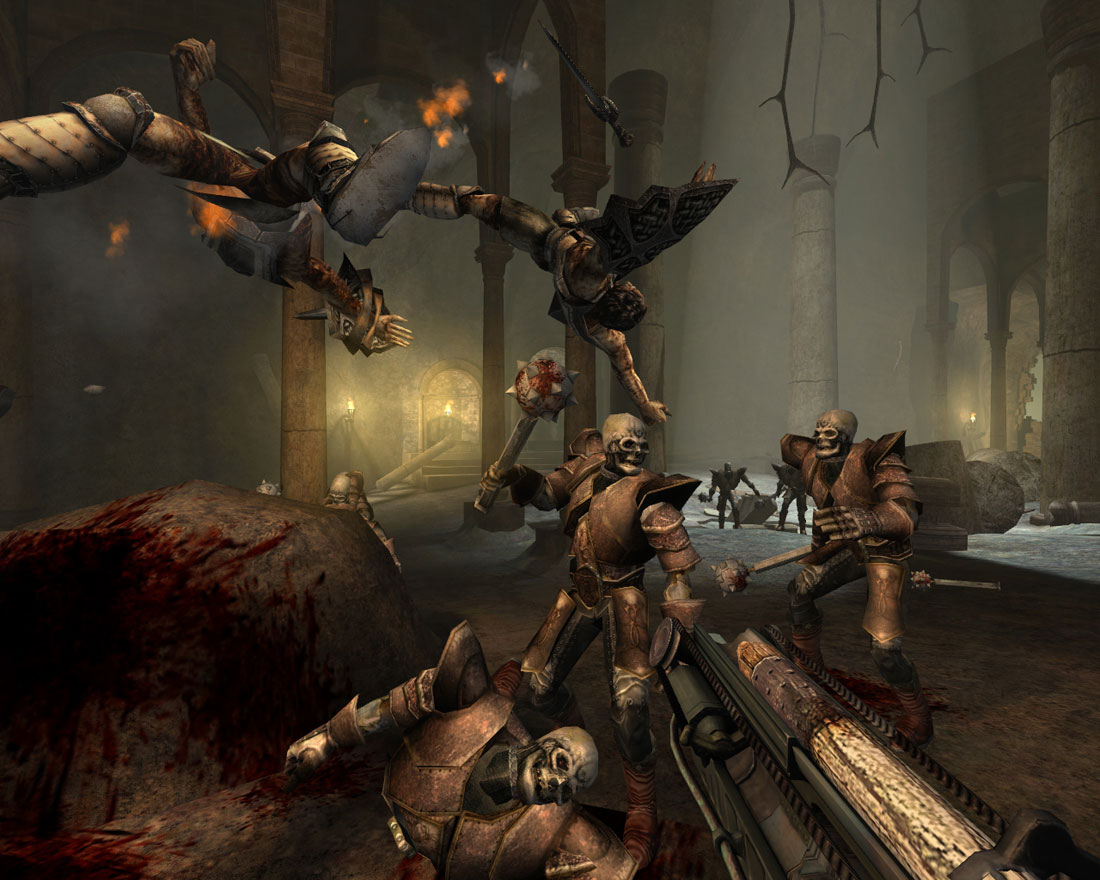
In a large number of action titles, you will be moving along a path and come across a space specifically design for a set piece to happen in.  An example of this can be Gears of War, where the abundance of chest-high walls will usually signify the approach of an incoming battle.  The player moves into this space aware of what they are looking to experience, readying their senses and acting accordingly.  They battle through this set-piece then find themselves moving along another path into the next conflict which will most likely follow the same pattern, regardless of size or prestige shifts between them.  Other examples such as a large open space with weapons littered around to signify an incoming boss battle or the more direct transitions in a game like Painkiller which feature an ongoing series of checkpoints can differ massively architecturally, but still give a similar impression to the player.  It shows that the environment can be a grand vista of physics and high-end graphical effects or simply rendered street but as long as the content aligns with the player’s desire for an experience in a well versed way it can be a great thing.  Referring back to Painkiller, some the environments may look quite simple, but its deliverance of content puts it low on the player’s priority of thoughts. 

Painkiller primarily is a series of arenas, but focuses heavily on combat to create an experience the player is looking for.  Image from http://www.nvidia.co.uk/ accessed 06/07/2015


To conclude, architecture can be a grand monument as much as a hovel but creation of an experience is what makes it truly shine.  Games do this brilliantly and it shows that chest-high wall galleries can be fun if the experience is attuned alongside it.  A game where the world around me is exploding into a million little events like Bulletstorm or Wolfenstein: the New Order can give me the same feeling of an experience as a puzzle in Antechamber due to their means of presenting the game-play to the player.  


References:
*Bataille G Archtiecture as shown in Leach, N. Rethinking Architecture(2008).  Routledge, London p.p. 20-23

Monday, 1 June 2015

Esports and Architecture: The Stadium

Over the past week or so, I’ve been watching the Dota 2 International qualifiers as teams compete to grab hold of the few open spots for the main event in August.  As I write this, NA’VI are up against Vega Squadron with it being 0-1 to Vega in a best of 5 for the European spot and it’s anyone game.  I don’t have a side that I’m particularly rooting for but personally I feel that it’s gonna be 3-2 to NA’VI; due to their experience of dealing with high-pressure situations. 

The upcoming International 5 showcases the increased popularity of Esports.  Image from blog.dota2.com accessed 01/06/2015


I have been watching ‘Esports’ for the past 10 or so years with games such as CS 1.6, CS:GO, WoW Arena, HotS, HoN, Dota (2) and so on.  I have always enjoyed watching competitive play and as games became a big part of my leisure time, it was somewhat natural to levitate towards watching it over conventional sports such as football or rugby.  Over this time, it has gone from strength to strength; due to the ability to easily stream with services like twitch and VoDs from YouTube; quick information access from social media and well-organised websites dedicated to presenting the news; the rise of financial support for the scene and greater level of production value being put into physical events (LANs).  Even if you didn’t have any interest in ‘Esports’, it is clear that its growth is significant and its viewer base is only going to get bigger. 

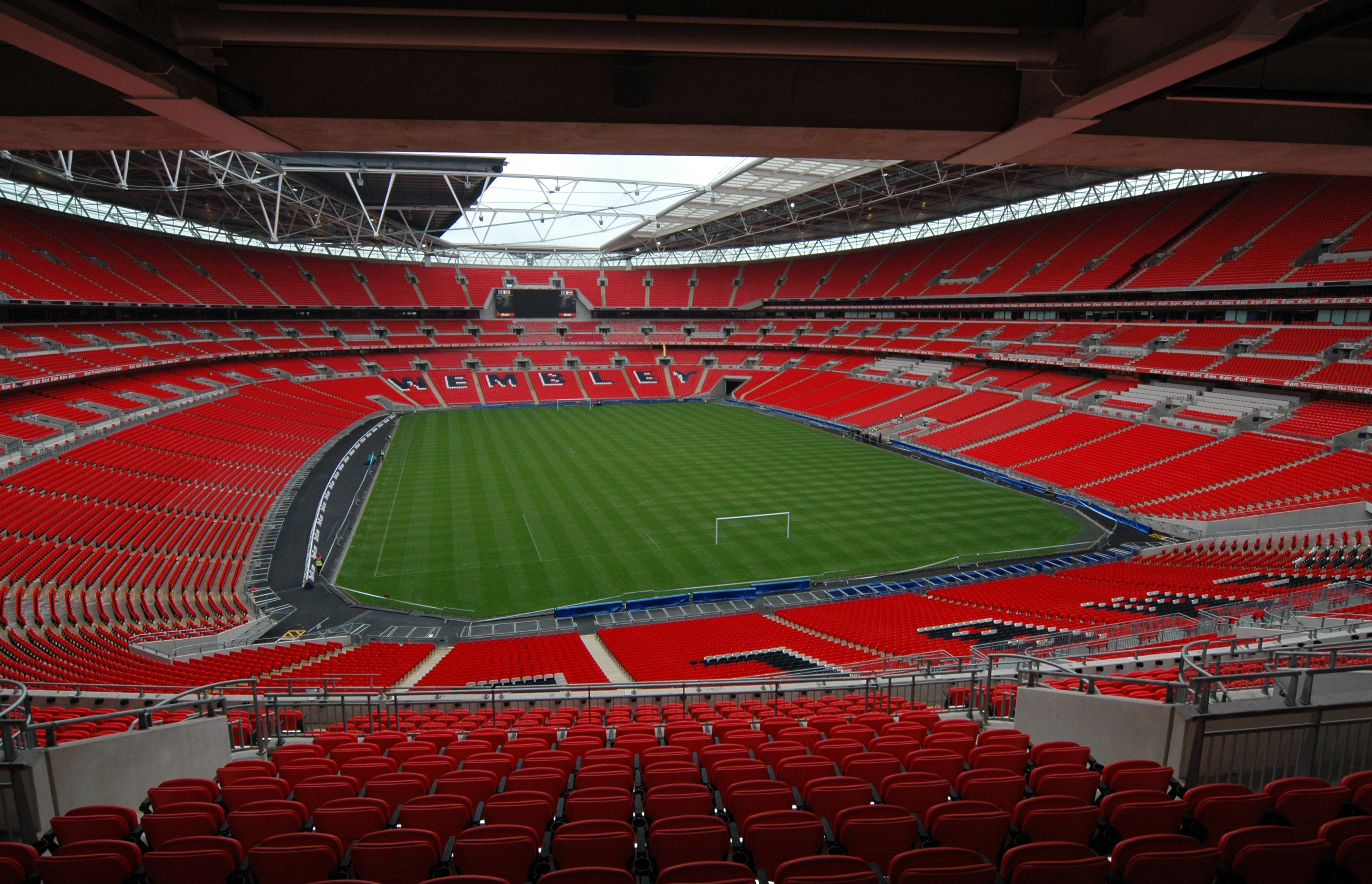
Wembley Stadium ready to show a football match.  Image from Wikipedia accessed 01/06/2015 


With all that said, there has always been the discussion of whether such a thing as a video game can be considered a sport.  There are of course many views that feel strongly one way or another, but for me I’d like to discuss this from an architectural point of view, using the stadium as a vector point.  I feel it has a way of showing how similar we are and how competitive gaming as a large-scale event visually correlates with a conventional sport event. 

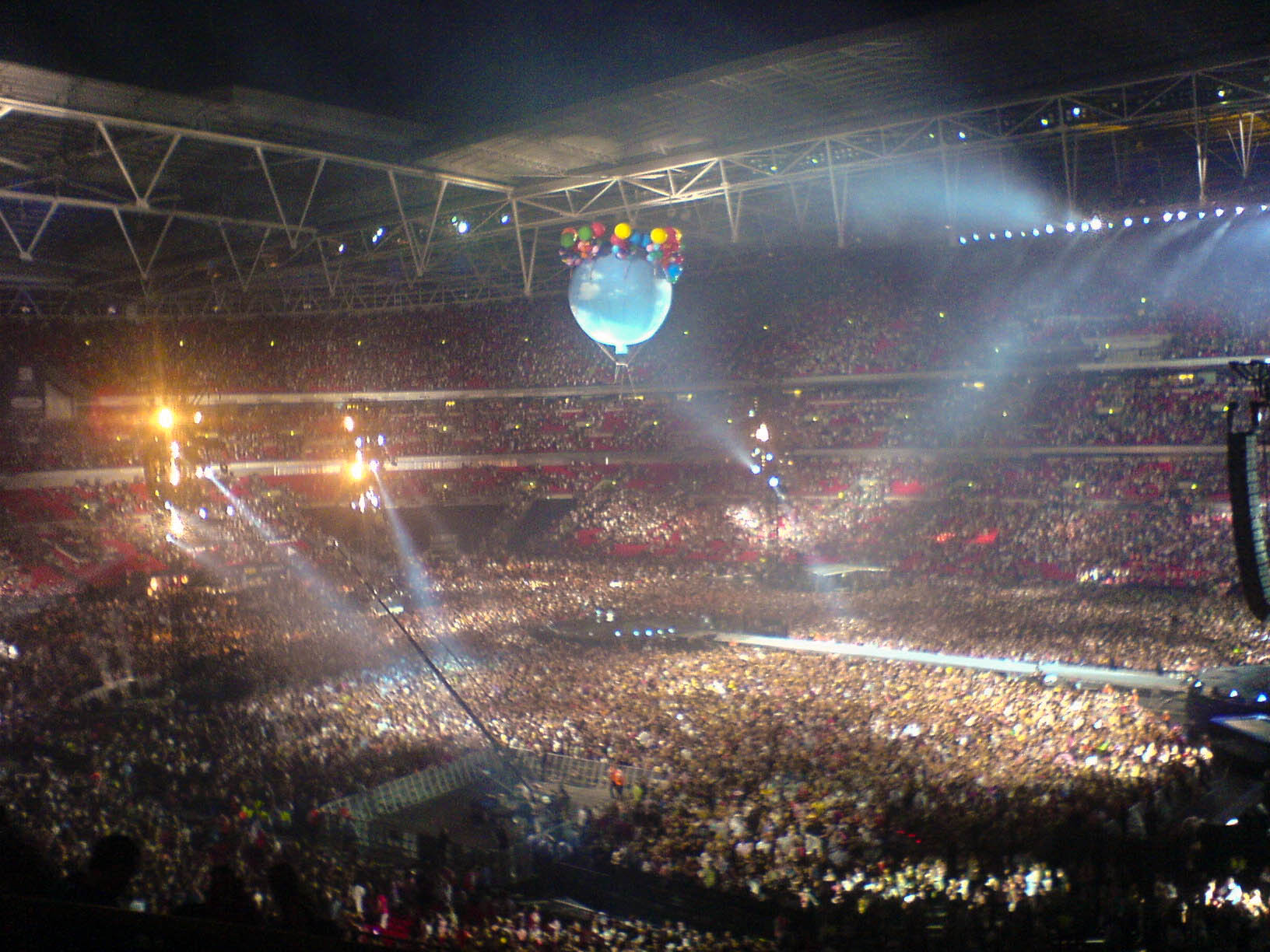
Wembley changes from a football ground to a concert event.  Image from Wikipedia access 01/06/2015


The stadium itself is quite simple in its own way; with its design focusing on giving a group of people a place to come together and experience an event together with relative ease and comfort.  Regardless of whether it’s a massive venue like Wembley or a local football ground with a couple of stands; it can accommodate different events by adapting itself to suit the needs presented.  To use Wembley as an example, it is used as a football pitch for big events such as the FA cup final, but it also has music concerts for bands like AC/DC or Foo Fighters.  Structurally, the stadium hasn’t changed beyond a temporary floor and stage in the space where a pitch would be, but beyond that everything is pretty much the same.  Visitors come with their tickets in hand; clothing and banners representing their support for a group through colours and logos; and cheer / scold on the action taken by those performing.  I have talked a lot in the past about how architecture is not the bricks and mortar but the experience that people feel in a place and by taking these experiences felt during a stadium event, one can see how ‘Esports’ also create architecture by giving people the ability to come together and have these mutual feelings akin to a football supporter seeing their favourite team play. 

The International #2 (2012).  Image from Wikipedia accessed on 01/06/2015


Going back to The International, for the past 3 years the finals have been held in Seattle to a host of thousands of people in person cheering for their teams.  During the Ti2-3 era, it was played at the Benaroya Hall, but recently it has been relocated to the Key Arena which in its time has hosted musical acts, basketball games and special interest events.  The International is a high quality event with match analysis, high profile commentators and multi-pov streams alongside a user-based compendium that gives people a program-like digital book to place their predictions and receive rewards while increasing the overall prize pool.  The arena itself features a large audience who dress in their teams’ colour; hold banners showing their favourite player / team / anecdote while pennants relating to the teams sit high up in the space which are lit-up according to their progress through the tournament.  The commentators sit to the side with their thoughts broadcasted over the PA system, while a large projection gives viewers the ability to either focus on the whole picture or a particular players pov.  The audience gasps and applauds as a play is made or a hero is picked much like a goal or skilled cross in football or the start of a song for a band.  The stadium remains the same, but with some minor changes it gives all these people the ability to experience these emotions which in turn, what makes a building architecture in my view. 

The International 4 showcases the difference 2 years makes.  Image from Reddit accessed 01/06/2015


I haven’t been able to attend any of these types of events yet, but I am very much looking forward to being able to in the future.  It doesn’t really matter if you believe that video games are/not a sport, but the stadium gives us the ability to enjoy our competitive activity and the potential for a roller-coaster of emotions that come with it. 

Update on Dota 2: 1-1 but it’s looking like NA’VI are going to take game 3.  If they take this it looks like it could be 3-1 final score but we shall see.

Monday, 18 May 2015

Returning to Path of Exile: Hardcore League, Knowledge and Architecture

So my last couple weeks have been a bit all over the place….

I originally planned to continue my Building in Starbound mini-series but I’ve come up against a couple things that I feel are important.  First of all, I don’t have that many resources available to me, especially with the recent update I’ve had to get back to my Homebase to work from my foundations.  It’s been a bit all over the place so I felt that I couldn’t really do something to the quality I was looking for with it.  I did look into using my older Terraria save, but there are a couple functions that I much prefer in Starbound such as augmenting existing blocks into something else e.g. glass block with frame for a window. 

There has also been the factor of some things I’ve found quite interesting recently and of course it’s much easier to write about something you’re enjoying rather than half-arsing it.  I do want to return to it in the future but I think I should spend some time re-educating myself about the practice of drawing building features before trying to replicate it in a virtual world.  In the mean-time, I have topics outline for the next couple weeks so should get back on schedule quickly. 

Without further to do, let’s talk about Path of Exile….

My first character from PoE.  Rather under-powered in comparison to my current play-through.  Screenshot taken 17/5/2015


I originally played PoE early 2013 coming off of playing Torchlight and getting a lot of enjoyment out of it.  ARPG’s had never been a genre I had played in the past, but by this point it was becoming a genre I could see myself playing for years to come.  I played a Templar which is a character that can naturally fit between the physical strength and magical caster to which I took a tanky ‘sword and board’ approach with elemental melee attacks.  I got a lot of enjoyment out of it, but it lost my interest in the later levels as it started to take a decent amount of time to clear mobs and I kinda wasn’t as tanky as I once thought.  Since then, I have become more aware of the game’s mechanics and with the announcement of the expansion the game has perked my interest once again.  This time however, I wanted to take a different approach. 

My current Templar with much higher dps while still keeping similar hp.  Screenshot taken 17/5/2015


I watched videos on the game from YouTubers such as ZiggyD, trawled the wiki and used the PoEBuilder to see how one can tailor a character and after playing through a couple new characters in ‘softcore’ I decided to go for it and make a character in the ongoing (or previous depending when you read this) Hardcore 1 month league.  I made a Templar again, but this time I looked to use projectile magic with buffs and totem summon with a nice mixture of stats for both defence and offense.  I was aware of the resistance reduction during the difficulties so planned accordingly, focused strongly on a core set of skills rather than lots of different ones and built regeneration to make sure that I wouldn’t be held back too often in terms of efficiency.  At the time of writing this, I’m half way into act 2 on Cruel difficulty and although I’ve had a couple close calls (~5% hp or less) I’m still holding on.  To the well versed PoE player, this isn’t anything special, but for me this means a lot as it took something to want to play in a mode where everything’s on the line.  Being cautious in the hardcore league has made my take on certain situations a bit slower, but as a by-product of this I have been able to take in the surroundings and see how much is going on as you traverse the landscape.  One such place was the Lunaris Temple with particular mention of level 3. 

Gold detail, smooth decor and sewers of blood throughout the lower Lunaris Temple.  Screenshot taken 17/5/2015


Lunaris is a place of contrast at heart within the bleakness of Wraeclast.  With grand walkways and golden motifs wrapped in quality cloths accenting the bold colours it gives the impression of a once powerful empire holding residence.  As you descend thou, you see Piety’s work (the boss of this location) created from a swarm of bodies and the blood runs dark red throughout its sewer system that perfectly back-up the array of miscreated beings that look to attack you as you progress through the area.  The gold and cloth are still there, it’s just being saturated by the blood creating a contrast that makes a piece of architecture seem so bleak and disgraceful have its own beauty.  This contrast is a narrative of architecture that has taken the building materials, the cladding and the décor and made something new of it.  Darkness, grit and grey can seem boring in many games but in the right hands (like with architecture) so much can still be done with its aesthetic.

Finer things in life within the Lunaris Temple.  Screenshot taken 17/5/2015


Being someone who finds Brutalism a fascinating time of architectural design, I very much hold this opinion that this bleakness can inspire and morph into something special.  Brutalism is often regarded as concrete monstrosities due to their concrete construction and greyish look, but through human interaction it has its own appeal.  Places like the Barbican Centre in London encapsulate this by being grey and concrete while adding different levels of high-rise, gardens, water and larger form walkways than your average tower block. 

Barbican Centre, London.  Photograph taken 14/02/2010


That being said, I wanted to find a piece of real-world architecture that encapsulates the Lunaris level 3 map and I feel that this does it…

A bone chandelier at the Sedlec Ossuary.  Image from Wikipedia 18/5/2015


The Sedlec Ossuary in the Czech Republic is a piece of architecture that makes bleakness and morbidity beautiful as it creates art through its bone collection.  Its chandelier, candelabra’s fixtures and various other items are all made from bones of the dead to around 40,000 remains (if Wikipedia is to be believed, unfortunately I’m not sure on the number myself I thought it was closer to 20,000).  On the surface, this place may seem outrageous or morbid, but its architecture has gone beyond its walls and created a narrative from it, much like Lunaris.  It’s in the nature of the ARPG to focus on the mob pulls and skill affects, but if you find yourself running through PoE anytime soon, take a second to look at the environment and think about what it portrays about what you’re doing and where you may be going.  I hope you found this interesting and good luck to those who choose to take the jump into a hardcore mode for the first time.

Let’s hope my Templar stays alive up to the end of Cruel at least.  -60% resistances is gonna be a bit of a bastard to deal with….


Monday, 9 March 2015

The Everyday Commute: Taking the Sights in

Over this past week and a bit, I’ve been fortunate to be involved in a number of projects and potential job interviews where I get to be a part of something I enjoy greatly.  The flip-side of this is that it has involved quite a bit of travelling so naturally things like this get pushed back.  Today I want to talk about my experiences of these journeys and the minor details that I found interesting through them. 
The idea of commuting is of course not an uncommon sight to behold, especially in the capital city of a nation, but being unable to drive I’ve always had the concept of commuting in my sight as a means to combat this issue.  For many people, the use of public transport for work is a mundane thing as it naturally becomes an everyday occurrence, but for me I’ve always had an enjoyment of travelling in an environment where I can continue to do other things while in transit.  This may be due to not experiencing said journeys in such high volume as the typical commuter, but time will tell whether this could become a thing. 

The journeys I had last week revolved around a need to commute into London via a combination of Bus and Tube within a timeframe of 1-3 hours, with minimal need to change lines between destinations.  Because of this, I was able to do last minute prep for interviews and consider some last minute ‘blue sky’ thinking for some ideas that may seem a bit odd.  While doing this, I started to consider the change in environment both internally (the train) and externally (local environment) and see how much was truly happening architecturally. 

As my closest tube station is Epping, my journey would always start on the Central line moving into London via Stratford bringing with it a mostly natural environment of trees and fields with a range of typical post-war terrace housing and older Victorian dwellings as I got within greater London.  Most of this didn’t really interest me, but what did was a rather large cemetery around Woodford / Buckhurst Hill (I think within that range maybe slightly further) which featured a range of colours from the donated flowers of loved ones contrasting the grey headstones dominating the landscape.  Internally, the carriage was an older model juddering along representing a line that could possibly do with some maintenance bringing an interesting dynamic to the passengers; with some carrying on their day and others showcasing a visual dislike for the situation.  The advertisements on show presented a fresh-foods monthly sub-box service (something that I personally don’t find much interest in) and vistas of the Las Vegas strip with that ever present ‘what goes in Vegas stays in Vegas’ which in my experience doesn’t really happen these days due to the advent of instant-access social media and my past two weeks of Facebook. 

The later parts of my journeys, in particular one to Harrow, felt rather different to this but in subtle ways (if that makes sense somehow?)  My experience of western London is somewhat limited to Hammersmith and upon talking to a number of friends / family they seemed to think that the area was rather upmarket (generally speaking not specifically the Borough).  What I was met with was a continued lowering of building density you would expect and a range of Victorian / post-war housing and the occasional parkland or stadium.  With that being said, going past Wembley Stadium it was interesting to see the range of corrugated iron sheds near to the track being dwarfed by this iconic structure; making me think about the Concept of high-art ‘Pillar of Fire’ in action around its revellers in their settlements that pale in comparison in the brief time I was able to see it while going past.  The train itself was a much more modern version with larger interior space and a smooth ride, aiding my ability to continue to write some plans and listen to an audiobook without physical or audio interruption. 

Overall, my past week of journeys have been an interesting experience for me and I hope to be able to have this potential means of working with people further beyond my usual local historic environment.  I don’t want to be held back with potential projects / jobs because the commute maybe a bit long and I do enjoy having the time to have some time to jot down thoughts and relax on the way to work.  Of course, time will tell if this viewpoint stays but here’s to joining the ranks of some million+ people who do it every day. 


One last thought, on the bus from Epping, there was an advert for Chlamydia by the NHS showcasing its potential hidden growth and ease of treatment with an aesthetic I would class as a cross between ‘visual novel’ and ‘graffiti’.  A minor point but I found it funny : )