Showing posts with label debate. Show all posts

Monday, 1 June 2015

Esports and Architecture: The Stadium

Over the past week or so, I’ve been watching the Dota 2 International qualifiers as teams compete to grab hold of the few open spots for the main event in August.  As I write this, NA’VI are up against Vega Squadron with it being 0-1 to Vega in a best of 5 for the European spot and it’s anyone game.  I don’t have a side that I’m particularly rooting for but personally I feel that it’s gonna be 3-2 to NA’VI; due to their experience of dealing with high-pressure situations. 

The upcoming International 5 showcases the increased popularity of Esports.  Image from blog.dota2.com accessed 01/06/2015


I have been watching ‘Esports’ for the past 10 or so years with games such as CS 1.6, CS:GO, WoW Arena, HotS, HoN, Dota (2) and so on.  I have always enjoyed watching competitive play and as games became a big part of my leisure time, it was somewhat natural to levitate towards watching it over conventional sports such as football or rugby.  Over this time, it has gone from strength to strength; due to the ability to easily stream with services like twitch and VoDs from YouTube; quick information access from social media and well-organised websites dedicated to presenting the news; the rise of financial support for the scene and greater level of production value being put into physical events (LANs).  Even if you didn’t have any interest in ‘Esports’, it is clear that its growth is significant and its viewer base is only going to get bigger. 
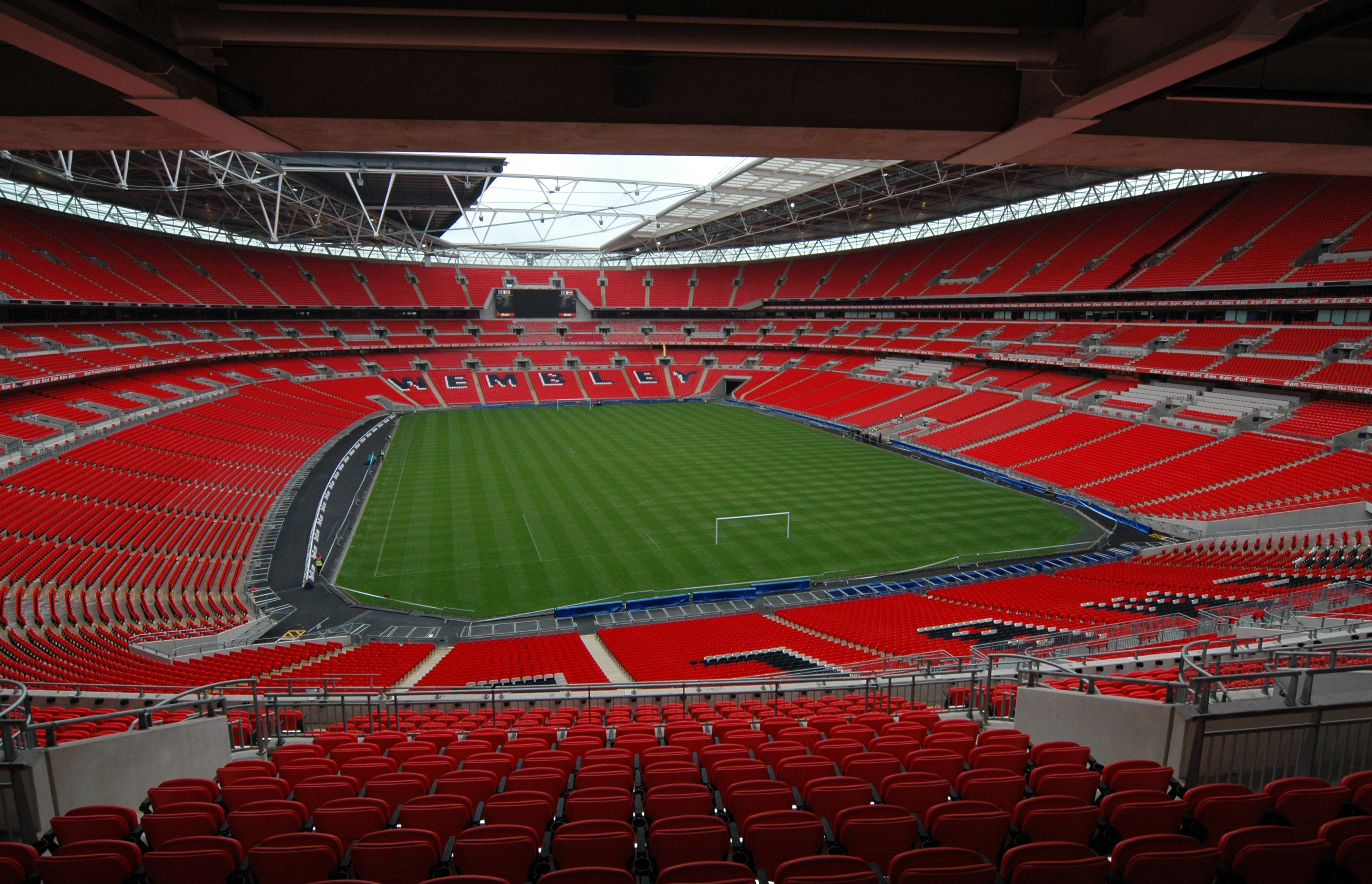
Wembley Stadium ready to show a football match.  Image from Wikipedia accessed 01/06/2015 


With all that said, there has always been the discussion of whether such a thing as a video game can be considered a sport.  There are of course many views that feel strongly one way or another, but for me I’d like to discuss this from an architectural point of view, using the stadium as a vector point.  I feel it has a way of showing how similar we are and how competitive gaming as a large-scale event visually correlates with a conventional sport event. 
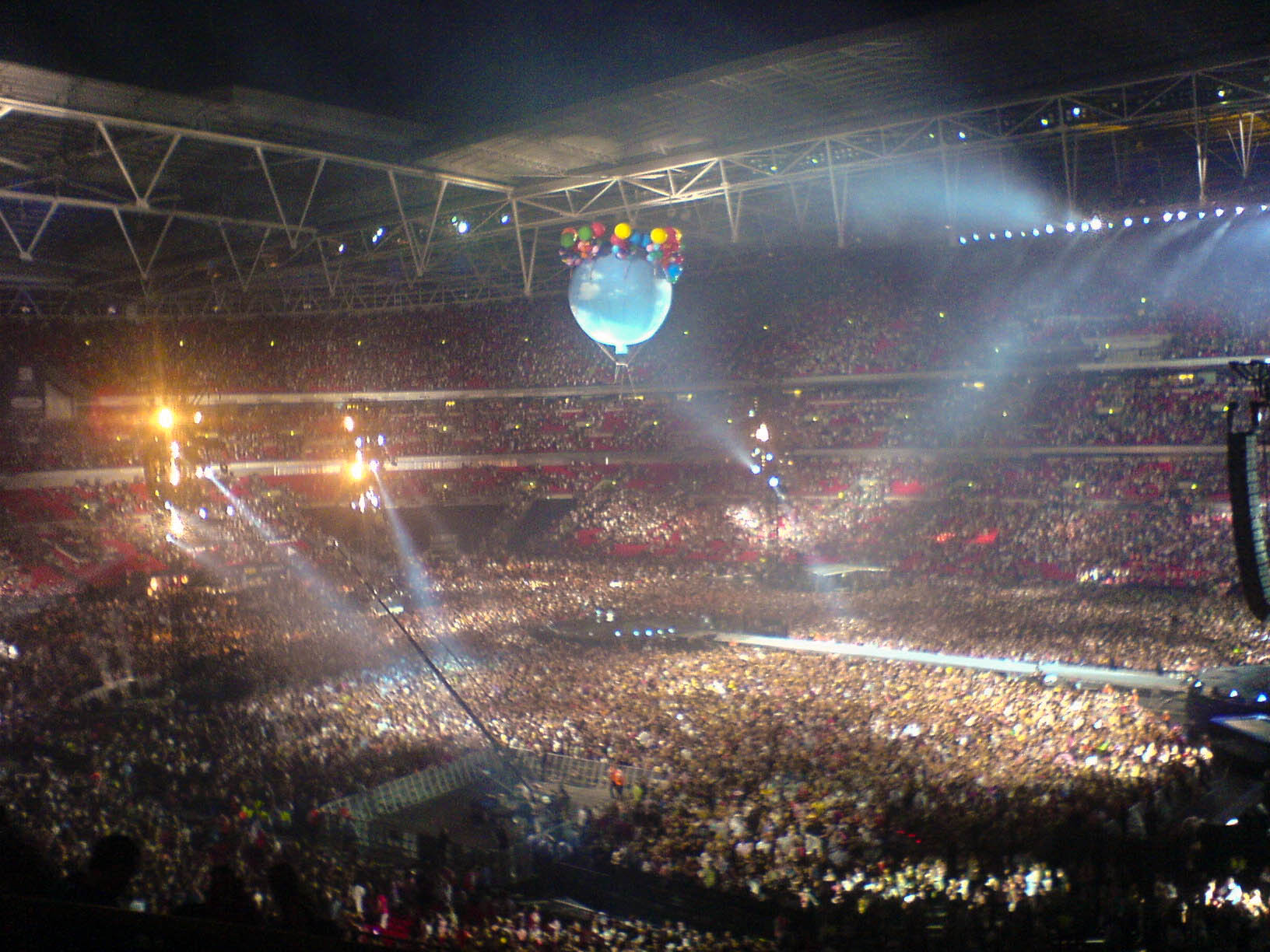
Wembley changes from a football ground to a concert event.  Image from Wikipedia access 01/06/2015


The stadium itself is quite simple in its own way; with its design focusing on giving a group of people a place to come together and experience an event together with relative ease and comfort.  Regardless of whether it’s a massive venue like Wembley or a local football ground with a couple of stands; it can accommodate different events by adapting itself to suit the needs presented.  To use Wembley as an example, it is used as a football pitch for big events such as the FA cup final, but it also has music concerts for bands like AC/DC or Foo Fighters.  Structurally, the stadium hasn’t changed beyond a temporary floor and stage in the space where a pitch would be, but beyond that everything is pretty much the same.  Visitors come with their tickets in hand; clothing and banners representing their support for a group through colours and logos; and cheer / scold on the action taken by those performing.  I have talked a lot in the past about how architecture is not the bricks and mortar but the experience that people feel in a place and by taking these experiences felt during a stadium event, one can see how ‘Esports’ also create architecture by giving people the ability to come together and have these mutual feelings akin to a football supporter seeing their favourite team play. 

The International #2 (2012).  Image from Wikipedia accessed on 01/06/2015


Going back to The International, for the past 3 years the finals have been held in Seattle to a host of thousands of people in person cheering for their teams.  During the Ti2-3 era, it was played at the Benaroya Hall, but recently it has been relocated to the Key Arena which in its time has hosted musical acts, basketball games and special interest events.  The International is a high quality event with match analysis, high profile commentators and multi-pov streams alongside a user-based compendium that gives people a program-like digital book to place their predictions and receive rewards while increasing the overall prize pool.  The arena itself features a large audience who dress in their teams’ colour; hold banners showing their favourite player / team / anecdote while pennants relating to the teams sit high up in the space which are lit-up according to their progress through the tournament.  The commentators sit to the side with their thoughts broadcasted over the PA system, while a large projection gives viewers the ability to either focus on the whole picture or a particular players pov.  The audience gasps and applauds as a play is made or a hero is picked much like a goal or skilled cross in football or the start of a song for a band.  The stadium remains the same, but with some minor changes it gives all these people the ability to experience these emotions which in turn, what makes a building architecture in my view. 

The International 4 showcases the difference 2 years makes.  Image from Reddit accessed 01/06/2015


I haven’t been able to attend any of these types of events yet, but I am very much looking forward to being able to in the future.  It doesn’t really matter if you believe that video games are/not a sport, but the stadium gives us the ability to enjoy our competitive activity and the potential for a roller-coaster of emotions that come with it. 

Update on Dota 2: 1-1 but it’s looking like NA’VI are going to take game 3.  If they take this it looks like it could be 3-1 final score but we shall see.

Monday, 22 September 2014

Receiver and the Discussion of Combative Design Theory (form:function)

These past couple weeks have been rather busy with ‘IRL’ stuff so naturally things like this have been pushed to the side.  That being said, I enjoyed a little game over the weekend that I want to talk about in regards to a relatively modern architectural design choice. 

Receiver is a very small indie-fps title from Wolfire Games created as part of a 7 day fps game challenge which looks to create quasi-realistic gun mechanics.  Whereas in a conventional fps the reloading mechanics are a single button press; receiver includes individual bullets, magazine loading, checking the chamber and releasing the hammer to name a few.  It’s a rather confusing experience when you initially load in, but after around 15-20minutes the gunplay was making sense and it becoming rather enjoyable. 

Alongside these mechanics there is RNG based level design, item placement and enemy locations that keep you on your toes as you navigate your surroundings.  One may call this a ‘roguelike’ in terms of its permadeath and random starting loot, but I feel it’s more towards a tactical shooter by its combat mechanics. 

While playing this game, I got a feeling of a couple schools of thought in design and play on the concept apparent in Receiver.  Firstly there was the age old ‘form vs. function’ theory that discusses the relationship between aesthetics (form) and mechanics (function).  In architecture, this can sometimes be the nature between an engineer and an architect but certain eras in architecture have gone one way or another e.g. Brutalism tends to be on the side of ‘function’.  Receiver is a game of pure mechanics in its gunplay while its aesthetics are rather spartan in its night time city-scape and plain rooms.  Not to say that this is a bad thing as one should remember this was made in 7 days…

The other feeling I got from this game was a kind of Deconstructionism / Victorian industrial ideology that turns the ‘function’ side of the debate into its own aesthetic.  A couple examples of these traits include London Paddington Station; Lloyds building in London and the Pompidou Centre in Paris.  Each of these examples uses the structure, the framework and the stuff that is usually hidden away behind walls in conventional buildings to create their own pieces of art and design through architecture.  Looking at these examples, one can see a correlation of Receiver and typical fps games through the use of the reloading mechanic; as the simple press of a button (usually R) is now a fully-fledged mechanic to take into consideration.  There are games that have played around with the reload mechanics in the past (one of the more famous examples being Gears of War) but I feel this is the most literal and by proxy the closest to the above architectural theory. 

To be honest, I grabbed this game on the Humble Store end of summer sale for free, but you may find it interesting to review in how minor aspects of design can be created into a new format.  Outline theories you may want to look at include symbolism, discussion of ‘space’ and usage of signs in culture but overall I hope you found this discussion interesting. 


References / further reading
*Receiver, Wolfire Games (2012)
*Eco, U. Function and Sign: The Semiotics of Architecture
*Barthes, R. Semiology and the Urban
*Bachelard, G. Poetics of Space

Tuesday, 26 August 2014

Historiography, Critical Thinking and Gaming Discussions

Over the past couple weeks; discussions surrounding gaming have been rather heated involving certain people and their practice.  Gaming, like other forms of leisure and art, finds itself having very strong opinions one way or the other with a limited central representation.  As it has been discussed for many generations; we associate by what we exclude and this carries onto hot-button topics not just in gaming; but in politics and social status, economics and welfare, artistic forms and interpretation, and so on and so forth.  That being said, I’m not too interested in this debate and it would do this blog a disservice to ‘pick a side’.  Because of this, we’re going to review why people may have a particular opinion and the potential weight to said opinion.  In history, this comes under the discussion of Historiography. 

Historiography is the discussion of the opinions behind an event and the correlation between them.  Historians naturally find themselves writing about important events (wars, political premierships, etc.) and over time a group of people will have similar opinions.  This is known as a school of thought and there are a number of factors behind this.  To give an example we’re going to briefly review the Cold War and its Historiography.

The Cold War was a significant event after WW2 that shaped world events for a course of 40-50 years (that to some extent still do) between Russia and the USA.  Throughout the Cold War there were 3-4 schools of thought that changed for a number of reasons:

1 – Traditional / Orthodox.  Coming from American historians starting in the 1950s, this view was naturally a pro-American viewpoint.  It discussed how America was in the right and it was protecting the world against the Russians and communism.  Such things discussed are the domino theory and the iron curtain. 

2 – Soviet / Socialist.  The opposite view coming from Russian historians of the same era, this was a pro-Russia viewpoint.  It discussed how Russia was treated unfairly and was a country on defence, looking out for its people.  Such things discussed are the capitalist vs. communist conflict and America’s missile bases in Europe. 

3 – Revisionist.  The alternative view coming from American historians in the 1960s.  This decade brought the ‘peace not war’ mentality and the Vietnam War; a conflict that caused a split opinion on the home front.  It looks to critique the traditional view and consider America’s own mishaps.  Historians of this school of thought tended to have a ‘left-wing’ mind-set although not exclusively. 

4 – Post Revisionist.  There are some differences of opinion to this school of thought, but for this I’ll be looking at the later soviet period and its policies.  Gorbachev, known as the reformer, created the policy of Glasnost (openness) in the 1980s to allow greater freedom of information and less censorship.  Historians of many backgrounds (not just American / Russian) now had a wealth of information to review and produce new interpretations. 

So as you can see, many different factors can come into play when we see someone’s opinion.  We can pair this with Critical Thinking to hypothetically break apart someone’s viewpoint to see what weight we can give them.  In Critical Thinking, we want to analyse things like corroboration, vested interests (bias), data, tone, body language, etc.  The last two are a bit more difficult to discuss on the internet but it’s something to consider.  So, let’s try and create a hypothetical example:

“Are you pro or anti <insert topic here>”

Person X is pro-topic

Person Y is also pro-topic

Person Z is anti-topic

Person X’s previous posts on the subject have been pro-topic as well as their friends.  They fit into a school of thought that believes in said topic.  They may also be other factors like agreeing in association (the friends are together because of this); personal background (parents / community may have this opinion); or dissociation (person X disagrees with someone of the anti-topic viewpoint).

Person Y’s post on the matter mentions a number of resources to back up their viewpoint.  This person is using corroboration to give weight to their view.  That being said, it depends on the validity of said resources and whether they have any particular vested interests.  Like with X, Y may also have some of the traits mentioned above. 

Person Z’s post originally discusses the topic but moves to challenge X and Y.  This person can look to critique the resources or the association concept between them to try and review why they may have the same opinion.  The challenge moves away from the topic so at this point the subjects of tone and body language come into play to see what language they use and what particular viewpoint they’re trying to refer to. 

This of course is a limited example and I’d ask that you do some further reading into the subject of critical thinking.  I should stress that this doesn’t intend to pursue anything but the discussion of ‘why’ which interests me most.  You could see this as a personal reflection and consider where you sit on certain topics and why.  Was it because of a particular news story on the matter, a friend’s mention of it, your own morals related to your upbringing, etc?  

I hope you find this discussion interesting.  Next time, I want to take fragments of this subject into the world of Architecture as we debate ‘form vs. function’ and the concept of Kitsch.